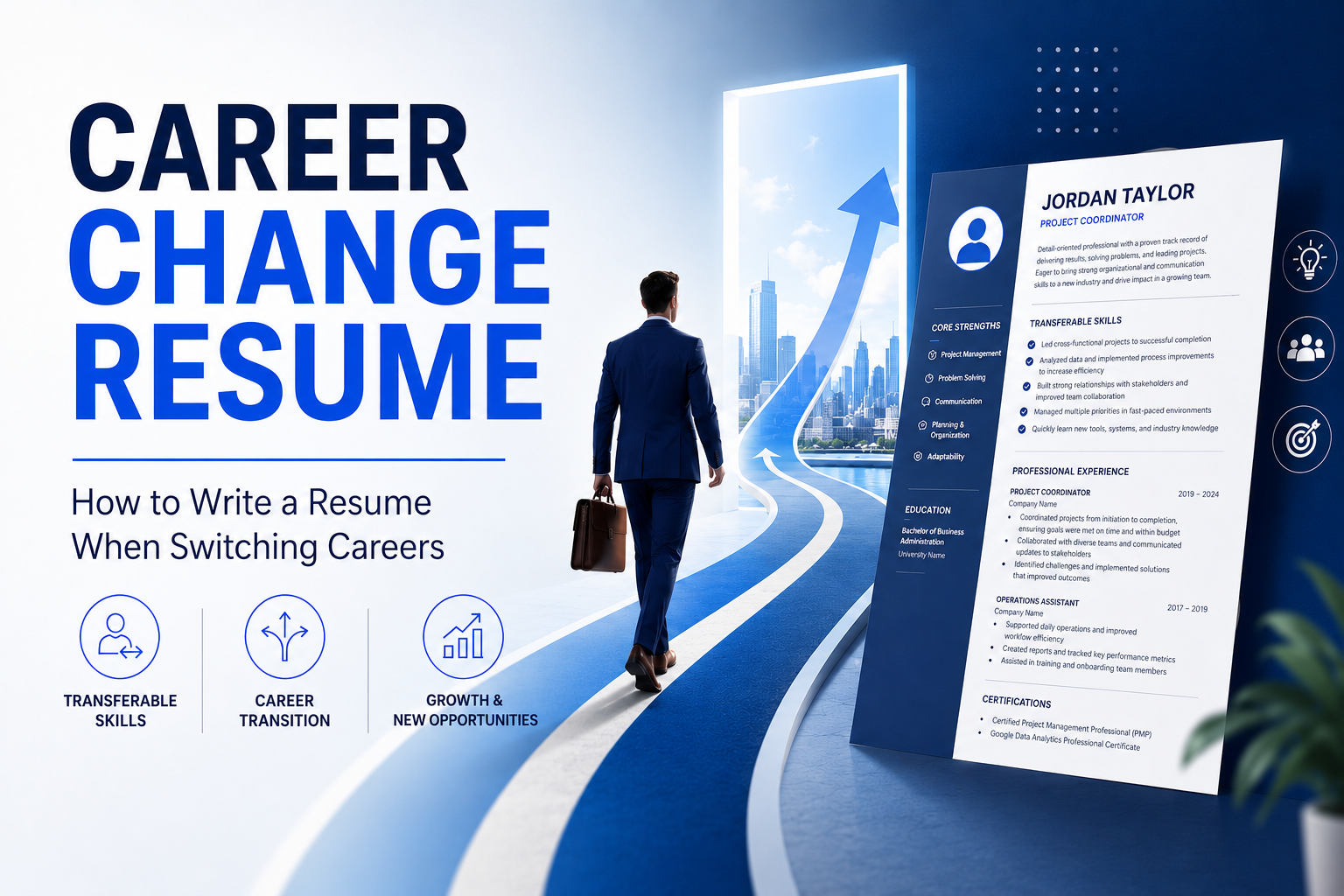
Changing careers can be exciting, but it also creates a unique resume challenge. Your previous experience may be valuable, yet recruiters may not immediately see how it connects to your new target role. A well-written career change resume helps bridge that gap by focusing on transferable skills, relevant achievements, and the value you can bring to a new industry or position.
The goal is not to hide your past experience. Instead, you should present it in a way that supports your new career direction. This means choosing the right resume structure, rewriting your professional summary, prioritizing relevant skills, and describing your achievements in language that matches your target role.
In this guide, you will learn how to write a career change resume that clearly explains your professional value, highlights transferable strengths, and helps recruiters understand why your background can be relevant to your next opportunity.
Start With a Clear Career Change Strategy
Before rewriting your resume, define the type of role you want to target. A career change resume becomes much stronger when it is written for a specific direction rather than trying to appeal to every possible opportunity.
Review job descriptions for your target role and identify the skills, responsibilities, tools, and qualifications employers mention most frequently.
Then compare those requirements with your existing background and look for connections such as:
- Transferable skills that apply across industries
- Projects or responsibilities similar to the new role
- Relevant certifications or training
- Achievements that demonstrate problem-solving, leadership, communication, or analytical ability
- Industry knowledge that may support your transition
This comparison will help you decide what to emphasize and what to reduce when restructuring your resume.
Highlight Your Transferable Skills
Transferable skills are abilities that remain valuable even when you move into a different industry or role. These skills can help recruiters understand how your previous experience can still contribute to your new career direction.
Common transferable skills include:
- Communication
- Leadership
- Project management
- Problem-solving
- Data analysis
- Client management
- Team collaboration
- Time management
- Presentation skills
- Process improvement
Do not simply list these skills without context. Whenever possible, support them with examples from your previous experience so recruiters can see how you have applied them in real situations.
Rewrite Your Professional Summary for the New Career
Your professional summary is one of the first sections recruiters read, so it should immediately support your new career direction. Avoid using a summary that focuses only on your previous job title or industry.
Instead, write a short summary that connects your existing experience with the skills and strengths required for your target role.
A strong career change summary should highlight:
- Your total years of relevant professional experience
- Transferable skills that match the new role
- Key achievements or measurable results
- Relevant certifications, training, or tools
- Your target career direction
Keep the summary focused and specific. The goal is to help recruiters quickly understand why your background is relevant even if your previous job title is different from the role you are now targeting.
Focus on Relevant Achievements, Not Just Responsibilities
When changing careers, your resume should show results and impact rather than simply listing routine responsibilities. Recruiters are more likely to understand your value when they can see what you achieved in your previous roles.
Try to describe your experience using measurable outcomes whenever possible.
Instead of writing:
Responsible for handling customer queries and coordinating with internal teams.
Write:
Resolved customer issues, coordinated with cross-functional teams, and improved service efficiency by streamlining communication and follow-up processes.
Even if your previous industry is different, achievements related to communication, leadership, efficiency, analysis, problem-solving, or project execution can still demonstrate skills that are valuable in your new target role.
Tailor Your Resume to the Target Job
A career change resume should not be generic. Each application should be tailored to the specific role you are targeting so recruiters can quickly see the connection between your background and the job requirements.
Review the job description and identify important keywords related to skills, tools, responsibilities, and qualifications. Then use those terms naturally in your resume where they accurately reflect your experience.
Pay particular attention to sections such as:
- Professional summary
- Core skills
- Work experience
- Projects
- Certifications
- Tools and technologies
Tailoring your resume also improves its relevance for Applicant Tracking Systems, while making it easier for recruiters to understand why you may be a strong fit for the new role.
Show Relevant Learning, Certifications, and Projects
When switching careers, recent learning can help demonstrate that you are serious about moving into the new field. Relevant certifications, courses, and practical projects can strengthen your resume, especially when your previous job experience does not directly match the target role.
You can include:
- Relevant professional certifications
- Online courses related to the target role
- Personal or freelance projects
- Portfolio work
- Industry-specific tools or software
- Workshops or practical training
Place the most relevant learning and projects where recruiters can easily notice them. If a project demonstrates skills required for the new role, briefly describe what you did, which tools you used, and what outcome you achieved.
Choose the Right Resume Format
The format of your resume can make a major difference when you are switching careers. Your goal should be to place the most relevant information where recruiters can find it quickly.
For most career changers, a combination resume format works well because it allows you to highlight important skills and achievements before presenting your full work history.
A practical structure can include:
- Professional summary
- Core or transferable skills
- Relevant achievements
- Work experience
- Projects
- Certifications and training
- Education
Avoid hiding your employment history completely. Instead, keep it clear and truthful while giving more visual priority to the skills, achievements, and experience that support your new career direction.
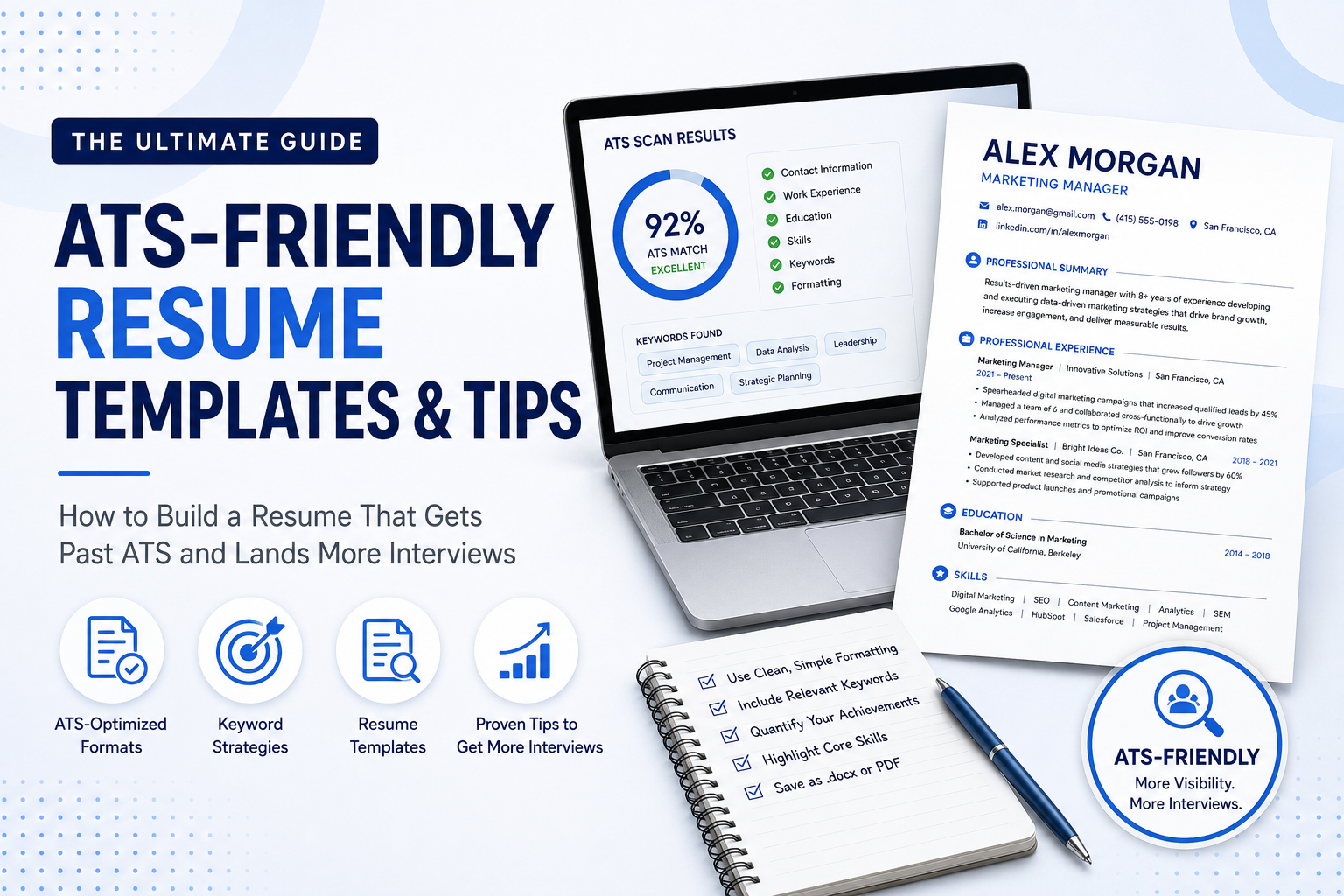
Keep Your Career Change Resume ATS-Friendly
Even during a career switch, your resume should remain easy for Applicant Tracking Systems to read. A visually complex design may look attractive, but it can create problems if important information is difficult for the system to identify.
Use a clean and professional layout with clear section headings, readable fonts, and a simple structure. Make sure the keywords used in your target job description appear naturally throughout your resume where they genuinely match your skills and experience.
For better ATS compatibility, avoid unnecessary elements such as:
- Complex tables and text boxes
- Important information placed inside graphics
- Excessive icons or decorative elements
- Unusual section headings
- Keyword stuffing
- Overly complicated multi-column layouts
A simple, targeted, and keyword-relevant resume makes it easier for both ATS software and recruiters to understand your experience and evaluate your suitability for the new role.
Address Your Career Change Positively
You do not need to apologize for changing careers. Instead, present the transition as a deliberate professional decision based on your interests, strengths, experience, and long-term goals.
Your resume should focus on what you bring to the new role rather than spending too much space explaining why you are leaving your previous field.
If your career change may not be immediately obvious, make the connection clear through your professional summary, transferable skills, relevant projects, and recent learning.
A confident and forward-looking approach helps recruiters see your career switch as a purposeful transition rather than a weakness.
Final Thoughts
Writing a resume for a career change requires a different approach from a traditional resume. Instead of focusing only on your previous job titles, highlight the transferable skills, achievements, projects, and learning that support your new career direction.
Keep your resume targeted, ATS-friendly, and easy to understand. A clear professional summary, relevant keywords, strong achievements, and the right resume structure can help recruiters see the value of your previous experience in a new context.
Planning a career switch and need a resume that presents your experience for a new role? GetRightCV can help you create a professional, ATS-friendly career change resume that highlights your transferable skills and supports your next career move.